
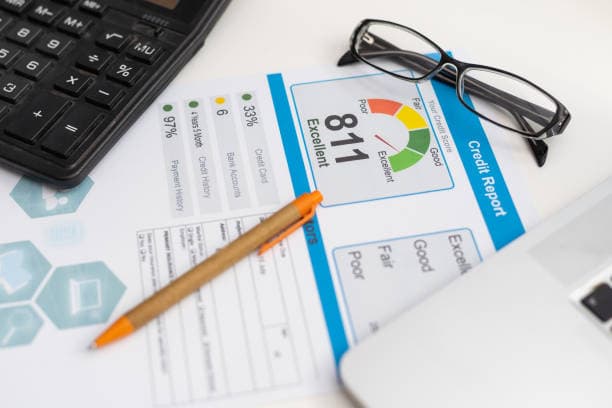
Applying for a personal loan, business loan, or credit card with a low CIBIL score often means rejection or a higher interest rate. The good news is that your score is not fixed, and a few smart steps taken before you apply can improve it noticeably.
What Is a CIBIL Score and Why Does It Matter?
A CIBIL score is a three-digit number between 300 and 900 that summarizes your credit history. Lenders use it to judge how reliably you repay. Most banks and NBFCs prefer a score of 750 or above, and 700 to 749 is usually considered good. Below 650, approval becomes difficult or interest rates go up. Exact cut-offs differ from lender to lender.
What Affects Your CIBIL Score?
Payment history is the biggest factor. After that come credit utilization (how much of your card limit you use), the mix of secured and unsecured loans, the age of your credit accounts, and the number of recent loan or card applications.
10 Ways to Improve Your CIBIL Score Before Applying
1. Check your CIBIL report first. Under RBI rules you can get one free full credit report every year from each credit bureau. Read it line by line, because the score alone does not tell you what needs fixing.
2. Fix errors in your report. A closed loan still showing as active, a wrong late-payment mark, or an account that is not yours can drag your score down. Raise a dispute with the credit bureau and the lender, and follow up until it is corrected.
3. Pay every EMI and card bill on time. Even a single late payment can hurt your score. Set up auto-debit or reminders so that nothing is missed.
4. Clear overdue amounts. Pay any overdue EMIs or card dues immediately, and try to close accounts fully instead of settling them. A settled status tells future lenders that you did not repay in full and can affect your score for years.
5. Keep credit card utilization below 30%. If your total limit is ₹1,00,000, try to keep your monthly usage under ₹30,000, and pay the bill before the due date.
6. Ask for a higher credit limit. A higher limit with the same spending lowers your utilization ratio. Just do not use the extra limit to spend more.
7. Do not apply for many loans or cards at once. Every full application creates a hard enquiry, and several in a short time make lenders think you are short of money. Compare offers first and apply only where you are likely to be approved.
8. Keep old accounts open. Older accounts in good standing increase your average credit age. Avoid closing your oldest credit card unless it has a high annual fee you cannot justify.
9. Reduce your existing debt. Lower outstanding balances improve both your utilization and your debt-to-income ratio. Focus on high-interest debt such as credit card balances first.
10. Watch joint accounts and guarantees. If you are a co-applicant or guarantor on someone else's loan, their missed payments can affect your score too. Keep an eye on those accounts.
How Long Does It Take to Improve a CIBIL Score?
Fixing a report error can show results in a few weeks once the dispute is resolved. Lower card utilization often reflects in one or two billing cycles. Recovering from late payments usually takes three to six months of consistent on-time payments, while defaults and settlements can take a year or more. Give lenders a few weeks after each change to report the updated data.
What to Avoid Right Before You Apply
Avoid taking new credit, closing several accounts together, missing any payment, or applying to many lenders just to check. Also stay away from anyone who promises a guaranteed score boost for a fee, because no one can legitimately do that.
Quick Pre-Application Checklist
• Download and review your CIBIL report.
• Dispute any errors.
• Clear all overdue payments.
• Keep card utilization below 30%.
• Avoid new loan or card applications for the last 3 to 6 months.
• Set up auto-pay for all EMIs and bills.
Frequently Asked Questions
What is a good CIBIL score to apply for a loan?
A score of 750 or above is generally considered good and gives you the best chance of approval and lower interest rates.
Can I improve my CIBIL score in 30 days?
Small gains are possible, for example by fixing report errors or paying down card balances. A significant recovery usually takes several months of disciplined repayment.
Does checking my own CIBIL score reduce it?
No. Checking your own score is a soft enquiry and does not affect it. Only lender applications create hard enquiries.
Will closing a credit card improve my score?
Usually not. Closing an old card can shorten your credit history and raise your utilization ratio, which can lower your score.
Can I get a loan with a low CIBIL score?
Sometimes, but usually with a higher interest rate, a lower amount, or a co-applicant. It is better to improve your score first.
Improving your CIBIL score takes patience, but the steps are simple: check your report, fix errors, pay on time, keep utilization low, and avoid unnecessary applications. Once your score is in good shape, check your eligibility and EMI on SureFund and apply with confidence. Our team can also help you match with the right bank or NBFC for your profile.
This article is for general information only and is not financial advice. Score ranges and lender criteria vary, so please confirm exact requirements with your lender.